Does South Carolina require a perc test?
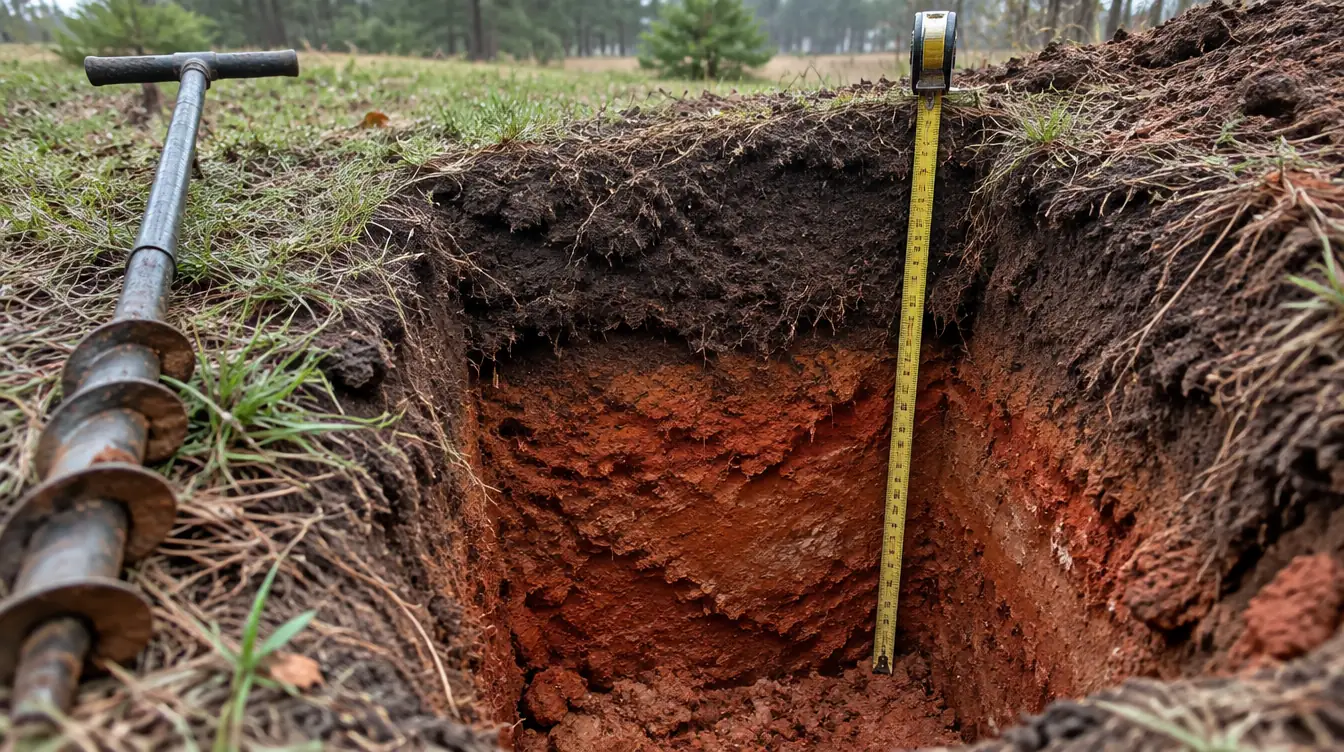
SCDES stopped using percolation tests in the late 1970s because they were not very accurate: a site could pass during a dry season and fail during a rainy stretch. Instead, an evaluator reads the soil itself, which shows how wet the ground gets over the whole year.
What does the soil evaluator look at?
- Borings and pitsAt least two soil borings. In the Upstate, the state also requires backhoe test pits, which you arrange.
- Soil colorColor patterns show the seasonal high water table no matter what month it is.
- Soil textureHow much sand, silt, and clay. Clay takes water slowly, so it needs a much bigger drain field.
- Depth to rock or a hard layerThe state needs more than 12 inches to rock or a restrictive layer, and room between the drain lines and the wet zone.
- The landscapeSlope and where water moves. Some system types are limited to gentle slopes.
- House sizeThe system is sized at 120 gallons a day per bedroom.
Setbacks the site has to meet
| From | Distance |
|---|---|
| Building | 5 ft |
| Property line | 5 ft |
| Ditch | 25 ft |
| Private well | 75 ft |
| Surface water | 75 ft |
| Public well | 100 ft |
From SCDES guidance for buying land. Your permit is the final word.
Who does the soil evaluation, and what does it cost?
- SCDES staffThe standard route. The state fee is $150 when you apply.
- Referral soil classifierA Professional Soil Classifier contracted through the SCDES referral program can charge no more than three times the state fee, so $450 at most.
- Private soil classifierYou hire them directly and they set the price. Required for subdivisions of 10 or more lots without utilities, and the route SCDES points you to if your lot will not pass for a conventional system.
- The backhoeIn the Upstate you also pay whoever digs the test pits.
What happens if your lot fails?
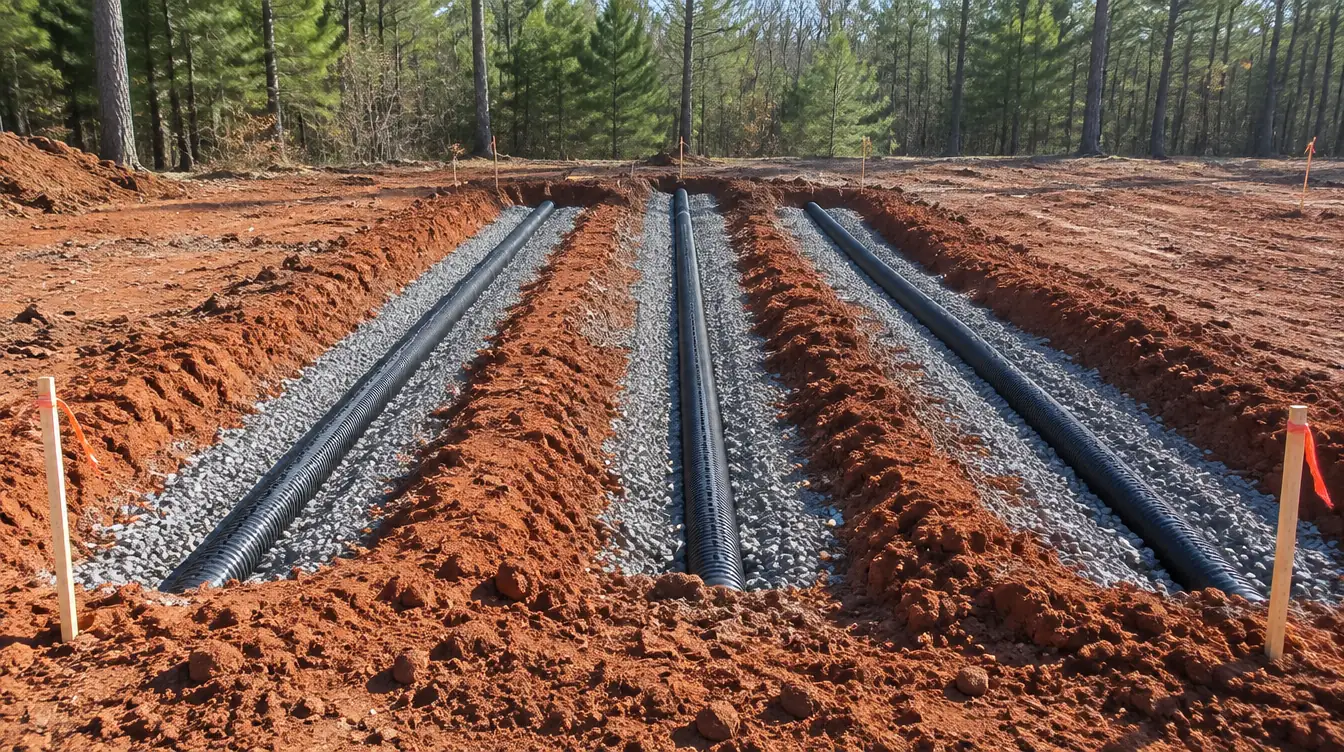
SCDES will not issue a permit when site conditions are unsuitable, but the evaluator will talk through alternatives. Depending on the soil, that can mean an alternative system design (shallow, mound, or fill-based systems) or an engineered system designed by a professional engineer with a soil classifier, which can cost thousands of dollars more. Some property is not suitable for any system, which is exactly why the evaluation belongs before you buy.
If you disagree with the decision, you can request a contested case hearing before the Administrative Law Court within 30 calendar days after the decision is mailed. When the rules are impractical for a specific site, a written variance request to SCDES is another route.
How long it takes
SCDES does not publish a turnaround time. Applications are worked first come, first served, and wet weather delays evaluations. Hiring a private soil classifier or engineer can shorten the wait. Once the permit to construct is issued, it is good for 5 years, and the rest of the process is in our septic installation guide.
Questions people ask
Does South Carolina require a perc test for a septic system?
No. SCDES stopped using percolation tests in the late 1970s because they were not accurate: a site could pass in a dry season and fail in a wet one. South Carolina uses a soil evaluation instead, which reads the soil itself.
How much does a perc test or soil evaluation cost in South Carolina?
The state charges a $150 site evaluation fee. A soil classifier hired through the SCDES referral program can charge no more than three times that fee ($450). A privately hired classifier sets their own price, and in the Upstate you also pay for the backhoe that digs the test pits.
What happens if my land fails the soil evaluation?
SCDES will not issue a permit for a conventional system on an unsuitable site, but the evaluator will discuss alternatives. Options include alternative system designs or an engineered system designed by a professional engineer, which can cost thousands more. Some lots are not suitable for any system.
Can I appeal a septic permit denial in South Carolina?
Yes. Within 30 calendar days after the decision is mailed, the applicant can request a contested case hearing before the Administrative Law Court. A variance request to SCDES is another route when site conditions make the rules impractical.
How long does a septic soil evaluation take?
SCDES does not publish a turnaround time. Applications are handled first come, first served, and wet weather can delay evaluations. Hiring a private soil classifier may speed things up.
Should I get a soil evaluation before buying land?
Yes, if the land will need septic. The evaluation tells you what kind of system the lot allows, or whether it allows one at all, and the county will not issue a building permit without the septic permit.
Buying land or planning a build? Request a quote and get the soil evaluation and install lined up.
Request a quoteSources
We check state and county rules against the source. Rules change, so confirm with the office that issues the permit before you act.
- SCDES: Septic tank frequently asked questions
- SCDES: What happens at a site inspection
- SCDES: Before you buy land
- SCDES: Septic permit for a single home
- SCDES: Professional Soil Classifiers
- SCDES form DES 25-0011: Soil classifier referral
- SC Regulation 61-56, Onsite Wastewater Systems
- SC Code Title 48, Chapter 6: Department of Environmental Services